Overview:
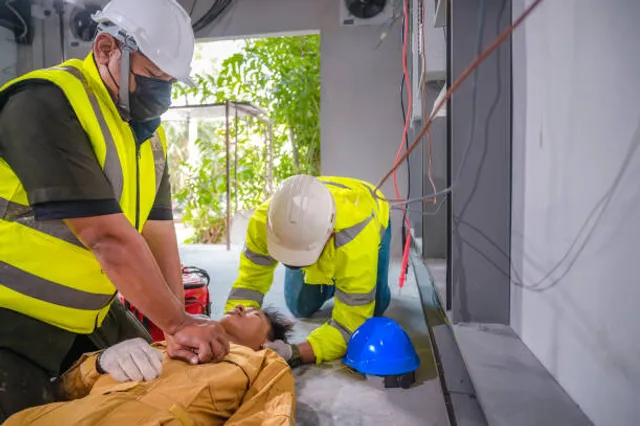
UETDRMP018 Perform Rescue from a Live Low Voltage Panel (LVR) provides participants with the skills and knowledge required to safely perform a rescue from a live low voltage panel and respond appropriately in an electrical emergency.
This nationally accredited course is designed for electricians, electrical workers and other personnel who work in environments where there is potential exposure to live low voltage electrical apparatus. Training covers essential rescue procedures, hazard and risk assessment, safe isolation, use of rescue equipment and appropriate emergency response.
Course Currency:
National Accreditation:
This nationally accredited training course is suitable for participants who are, or will be, undertaking electrical work, excluding overhead lines and underground cables. We recommend completing this course every 12 months, particularly for those working in the mining, construction and resources industries. Upon successful completion, you will receive a nationally recognised Statement of Attainment.
LVR training is based on the context of transmission, distribution or rail work functions. Participants are expected to complete or provide evidence of prerequisite requirements prior to attending the face-to-face course. Please allow sufficient time to complete the HLTAID009 Provide Cardiopulmonary Resuscitation (CPR) online theory and assessment before attending the practical training session.
Course estimated duration and maximum numbers:
The UETDRMP018 Perform Rescue from a Live Low Voltage Panel (LVR) practical training will take up to 3 hours, depending on participant numbers.
To ensure Skills Force Australia provides quality learning and training outcomes, we prefer to keep the maximum number of participants to 8 per course.
Pre-entry requirements:
- Fitness to Participate. You need to be agile and have the ability to perform CPR unassisted for two (2) minutes on the floor.
- Unique Student Identifier (USI) – all participants must hold a USI to receive a certificate for an accredited training course. To create a USI, head to www.usi.gov.au
- Language, Literacy, Numeracy and Digital (LLND) minimum level – Australian Secondary School Year 10 Certificate of Education statement of results with a C grade or higher in English and Mathematics, or successful completion of an Australian nationally recognised training qualification (delivered by TAFE or a Registered Training Organisation) at Certificate II level or higher, demonstrating equivalent LLND capability.
Pre-requisites:
Participants must hold a current HLTAID009 Provide Cardiopulmonary Resuscitation (CPR) qualification completed within the previous 12 months before attending the UETDRMP018 Perform Rescue from a Live Low Voltage Panel (LVR) course.
Please forward evidence of your current CPR qualification to [email protected] prior to attending the course.
Language Literacy and Numeracy requirement:
- Registered Training Organisations (RTOs) are required to obtain evidence that participants have an appropriate level of language, literacy, numeracy and digital (LLND) skills to successfully undertake this course. Participants must complete a short LLND quiz, which is automatically submitted to Skills Force Australia for assessment. If the quiz demonstrates that the required LLND standard has been met, participants may proceed with the online theory (where applicable) and practical training without further action.
- Participants who do not meet the required standard may be contacted by Skills Force Australia to discuss appropriate support or alternative arrangements to help them successfully participate in the course.
Please view the following Participant support links:
Reading and writing hotline: Reading Writing Hotline – Information and Advice
Workskil Australia: Workskil – Reading and Writing in English
Location:
Skills Force Australia is located in Wangara with free parking, however, there is the option for us to deliver group training at your workplace.
Skills and Knowledge Gained:
Perform Rescue from a Live Low Voltage Panel (UETDRMP018)
The UETDRMP018 Perform Rescue from a Live Low Voltage Panel (LVR) unit provides participants with the skills and knowledge required to safely respond to an incident involving a live low voltage electrical panel.
Training covers preparation for a low voltage rescue, assessment of hazards and risks, appropriate isolation and rescue procedures, use of rescue equipment and Personal Protective Equipment (PPE), safe removal of a casualty from the electrical hazard, and the actions required following a rescue.
Elements describe the essential outcomes and include:
- Prepare to perform rescue procedures from a live low voltage panel
- Carry out rescue from a live low voltage panel
- Complete the low voltage panel rescue procedure
Australian Standards 3745-2010:
Your emergency procedures including quality nationally accredited training is crucial to ensuring the safety of a workplace and involves multiple key factors that should be complied with in order to do so. AS 3745:2010 – “Planning for Emergencies in Facilities” provides a framework that is recommended as a vital reference when developing your workplace’s plans for emergency management.
It lays out how to meet Safe Work Australia’s Code of Practice on Managing the Work Environment and Facilities, which is a set of pragmatic guidelines to assist your compliance with the WHS Act (2011). AS 3745:2010 provides a summary of your minimum requirements when developing and implementing an emergency procedure or plan for your facility. This procedure ensures the safety of all those within the building (including visitors, contractors, etc.) during an emergency. It includes preparing for emergencies and should include procedures for any type of scenario that can affect your workplace.
Model Code of Practice: Managing the work environment and facilities Safe Work Australia:
This Code of Practice on managing the work environment and facilities is an approved code of practice under section 274 of the Work Health and Safety Act (the WHS Act). Duty holders who have a role in ensuring work environments and facilities are without risk to health and safety include:
- Persons conducting a business or undertaking (PCBUs)
- Persons with management or control of a workplace
- Designers, manufacturers, importers, suppliers and installers of plant, substances or structures, designers of structures, and officers.
The Code provides guidance on how to manage the risks associated with the work environment and facilities in the workplace using the following systematic process:
- Identify hazards—find out what could cause harm.
- Assess risks, if necessary—understand the nature of the harm that could be caused by the hazard, how serious the harm could be and the likelihood of it happening. This step may not be necessary if you are dealing with a known risk with known controls.
- Control risks—implement the most effective control measures that are reasonably practicable in the circumstances in accordance with the hierarchy of control measures, and ensure they remain effective over time.
- Review control measures to ensure they are working as planned.
Safe Work Australia link 2023: https://www.safeworkaustralia.gov.au/doc/model-code-practice-managing-work-environment-and-facilities
Certification:
Upon successful completion of your enrolment, training and assessment, you will receive a nationally recognised Statement of Attainment for:
Recertification:
This nationally accredited training course is suitable for participants who are, or will be, undertaking electrical work, excluding overhead lines and underground cables.
We recommend completing UETDRMP018 Perform Rescue from a Live Low Voltage Panel (LVR) training every 12 months, particularly for those working in the mining, construction and resources industries, to help ensure low voltage rescue skills remain current and can be confidently applied in an emergency.
Participants should also consider any specific refresher training or currency requirements that apply to their employer, industry or workplace.